
Hongshan Culture: Tracing the Dawn of Chinese Civilization in Chaoyang
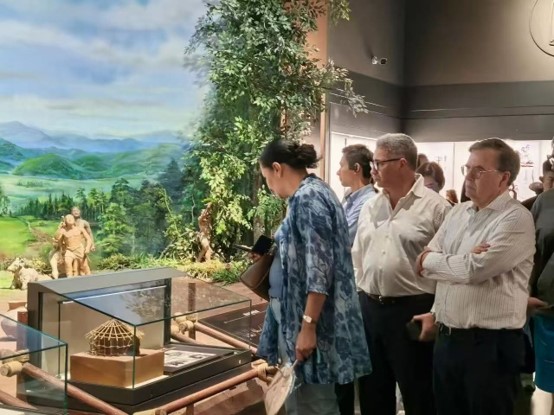
Diplomats and international organization representatives from 20 countries visit Niuheliang National Archaeological Site Park

Niuheliang National Archaeological Site Park

Clay Facial Sculpture of the Hongshan Goddess
Located in western Liaoning Province in Northeast China, Chaoyang is home to a remarkable legacy of ancient civilization. Dating back approximately 5,000 to 6,500 years, Hongshan Culture is one of the most significant prehistoric cultures in northern China, offering valuable insights into the origins and development of Chinese civilization.
Its legacy is particularly evident at the Niuheliang Archaeological Site, where discoveries of goddess figurines, stone burial structures, and exquisite jade objects reveal sophisticated ritual practices and a society of growing complexity.
Niuheliang: Uncovering Ancient Treasures
Niuheliang is a major archaeological site associated with Hongshan Culture. Among its most distinctive discoveries is the jade pig-dragon, a remarkable artifact reflecting the artistic skills and symbolic imagination of prehistoric communities.
Together with other finely crafted jade objects and elaborate burial complexes, these finds provide important clues to ancient beliefs, social organization, and ceremonial traditions. They also contribute to ongoing research into the emergence of social complexity and the early development of Chinese civilization.
Today, Niuheliang offers visitors a tangible connection to this distant past, bringing the achievements of prehistoric communities into focus through archaeological discoveries and heritage exhibitions.
A Crossroads of Cultural Exchange
Situated in the West Liaohe River basin, the region occupied an important position between different geographical and cultural zones. Archaeological comparisons between Hongshan artifacts and materials from other prehistoric regions continue to shed light on cultural interactions across ancient northern China and beyond.
Centuries later, Chaoyang became the capital of the Former Yan, Later Yan, and Northern Yan kingdoms during the Sixteen Kingdoms period. Known historically as Longcheng, the city developed into an important political and cultural center. From Hongshan Culture to the Three Yan kingdoms, Chaoyang's layered history reflects the diversity and long-term evolution of civilization in northern China.
Preserving Heritage, Connecting Past and Present
Today, Chaoyang is committed to protecting its cultural heritage and making history accessible to a wider public. The city is home to 24 museums housing more than 130,000 cultural relics, ranging from prehistoric artifacts and fossils to Buddhist treasures and historical artworks.
Archaeological conservation, museum exhibitions, historic street revitalization, and traditional cultural performances are helping connect heritage protection with contemporary life. Local crafts and folk traditions also continue to thrive through public programs, educational activities, and cultural tourism.
By integrating conservation, research, education, and tourism, Chaoyang is creating new ways for visitors to engage with its rich history while supporting sustainable urban development.
A Legacy for the Future
Hongshan Culture is more than a record of prehistoric life. It stands as a testament to human creativity, social development, and the emergence of complex cultural traditions in ancient China.
Through the preservation of Niuheliang and the promotion of its archaeological heritage, Chaoyang is bringing this remarkable history to a broader international audience. As research advances and conservation efforts continue, Hongshan Culture will remain an essential part of Northeast China's cultural identity, inspiring new discoveries and fostering a deeper appreciation of humanity's shared past.
Mike Qin
Media Strategy Global, LLC
Legal Disclaimer:
EIN Presswire provides this news content "as is" without warranty of any kind. We do not accept any responsibility or liability for the accuracy, content, images, videos, licenses, completeness, legality, or reliability of the information contained in this article. If you have any complaints or copyright issues related to this article, kindly contact the author above.
